

You want shutters that look great, last for years, and suit your lifestyle — but every supplier tells you their option is the best. Timber sounds premium. PVC sounds practical. Which one actually works for your home?
Choose wrong, and you could be dealing with warped panels, peeling finishes, unnecessary maintenance, or a product that simply doesn’t match your space.
In this guide, I’ll walk you through a clear, honest comparison of timber vs PVC shutters, based on real-world performance, cost over time, room suitability, and expert installation experience — so you can make a confident decision.
Table of Contents
- Timber vs PVC Shutters: Side-by-Side Comparison
- What Are Timber Shutters? Pros, Cons & Best Uses
- What Are PVC (Faux-Wood) Shutters? Pros, Cons & Best Uses
- Room-by-Room Guide: Which Shutter Works Best Where
- Cost, Lifespan & Maintenance: The Real Long-Term Picture
- Environmental & Sustainability Considerations
- Conclusion: How to Choose with Confidence
Timber vs PVC Shutters: Side-by-Side Comparison
| Feature | Timber Shutters | PVC Shutters |
| Appearance | Natural grain, premium feel | Smooth, consistent finish |
| Moisture Resistance | Low–Medium | Very High |
| Insulation | Excellent | Moderate |
| Maintenance | Medium–High | Low |
| Weight | Lighter | Heavier |
| Cost (Upfront) | $$$ | $$ |
| Best Rooms | Living rooms, bedrooms | Bathrooms, kitchens, laundries |
| Climate Suitability | Dry, stable environments | Humid & coastal areas |
Key takeaway: Timber wins on aesthetics and warmth; PVC wins on durability and practicality.

Timber Shutters: Pros, Cons & Best Uses
Timber shutters are crafted from natural hardwoods such as basswood or cedar. They’re often chosen for high-end interiors where visual impact matters.
Advantages of Timber Shutters
- Premium, natural appearance, no synthetic material, fully replicates real wood grain
- Excellent insulation helps regulate indoor temperature
- Adds perceived property value
- Lightweight, easier on hinges for large windows
Disadvantages of Timber Shutters
- Sensitive to moisture and humidity
- Requires ongoing care (resealing, repainting)
- Higher upfront cost
- Not ideal for wet rooms or coastal exposure
Maintaining timber is a commitment; much like choosing the right types of wall finishes for a room, you must ensure your shutter paint or stain is suited to the environment to prevent peeling.
Best Places to Use Timber Shutters
- Living rooms
- Bedrooms
- Home offices
- Formal dining areas
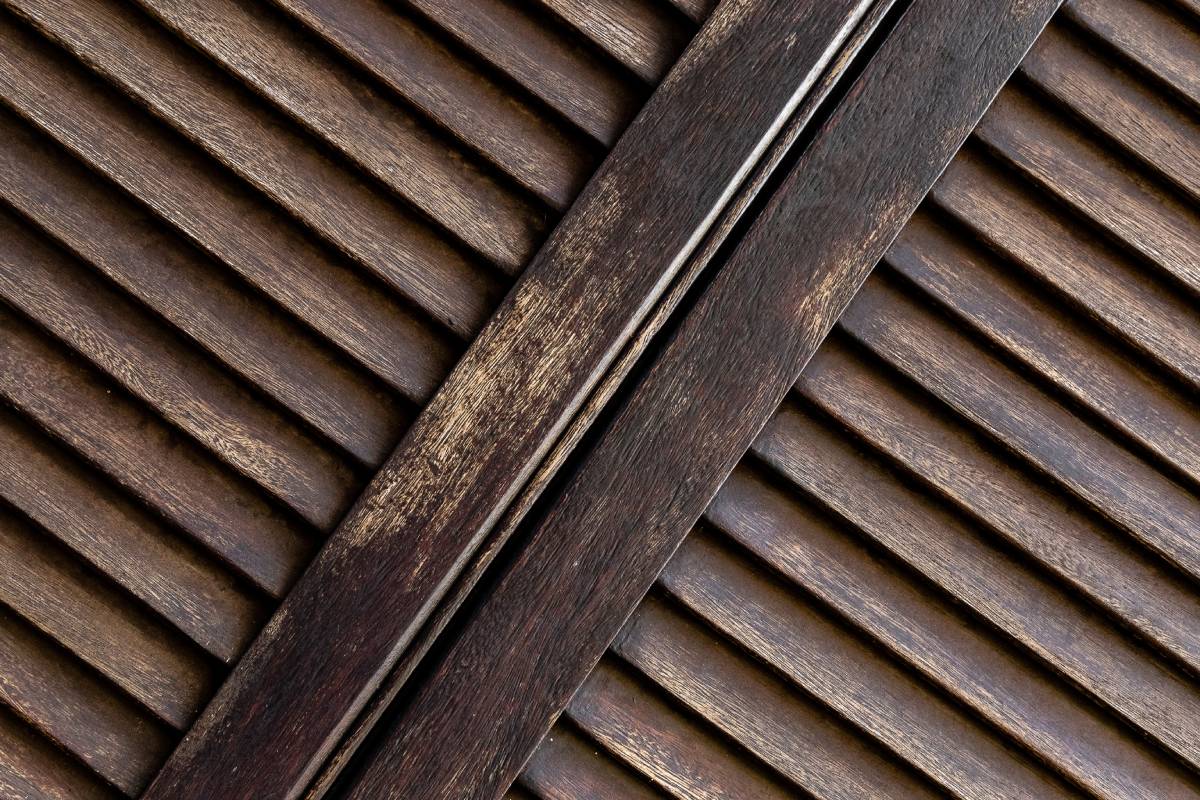
Pro Tip: Timber isn’t “set and forget”
If your home has fluctuating humidity or strong sun exposure, timber shutters should be professionally sealed. Poor sealing is the number one reason timber shutters warp prematurely.
PVC (Faux-Wood) Shutters: Pros, Cons & Best Uses
PVC shutters are made from synthetic or composite materials designed to mimic wood — but with better resistance to environmental stress.
Advantages of PVC Shutters
- 100% moisture-resistant — won’t warp or crack
- Ideal for bathrooms, kitchens & laundries
- Low maintenance — wipe clean with a cloth
- More budget-friendly
- Strong UV resistance (especially quality brands)
Disadvantages of PVC Shutters
- Heavier than timber
- Slightly less insulating
- Lacks the authentic warmth of real wood (though modern designs are close)
Best Places to Use PVC Shutters
- Bathrooms
- Kitchens
- Laundry rooms
- Coastal homes
- Rental properties
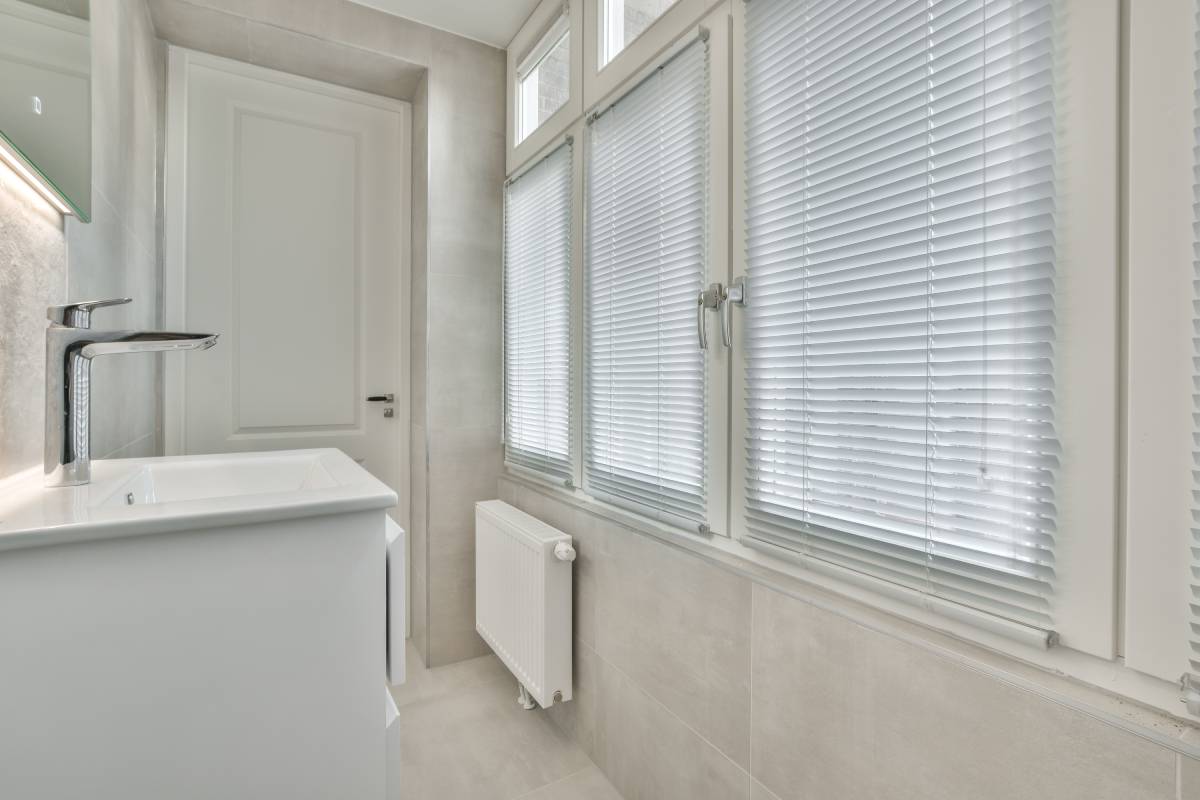
Expert Insight: Not all “PVC” is equal
Cheaper PVC shutters can yellow or become brittle over time. Always check UV-stabilisation specs and warranty length — quality PVC should last 15–25 years.
Room-by-Room Guide: Which Shutter Should You Choose?
Bathroom
✔ PVC shutters only
Steam and condensation will damage timber quickly.
Kitchen
✔ PVC preferred
Grease, moisture, and temperature swings make PVC the safer choice.
Living Room
✔ Timber shutters shine here
They elevate the space visually and improve insulation.
Bedrooms
✔ Timber or PVC
Choose timber for warmth; PVC if budget or climate is a concern.
Coastal Homes
✔ PVC shutters
Salt air accelerates timber degradation.
Cost, Lifespan & Maintenance: The Real Numbers
| Factor | Timber | PVC |
| Average lifespan | 15–25 years | 20–30 years |
| Maintenance | Repainting/resealing | Occasional cleaning |
| Repair likelihood | Medium | Low |
| Lifetime cost | Higher | Lower |
Important: Timber may cost more initially and over time, but it can still be worth it if aesthetics are your top priority. If you are strictly managing a renovation budget, you might also want to investigate are plantation shutters more expensive than curtains to see if a mix of window treatments could work for your home.
Environmental & Sustainability Considerations
- Timber shutters can be environmentally responsible if sourced from FSC-certified forests
- PVC shutters last longer and reduce replacement waste, but are petroleum-based
- Some modern faux-wood shutters use recycled composites, offering a hybrid solution
If sustainability matters to you, ask suppliers about:
- Certification
- Manufacturing process
- End-of-life recyclability
Conclusion: So, Which Shutter Should You Choose?
There’s no universal “best” shutter, only the right shutter for the right space.
- Choose timber shutters if you value warmth, authenticity, and premium aesthetics
- Choose PVC shutters if durability, moisture resistance, and low maintenance matter more
If you’re still unsure, the smartest move is a room-by-room approach, mixing materials where appropriate.